Every season, we meet talented female footballers, netballers and runners whose year ends with one awkward landing. Sports medicine research suggests that female athletes are roughly two to eight times more likely to rupture their anterior cruciate ligament than male athletes in the same sports. The encouraging part is that much of this risk can be reduced. In our London clinic, we have seen how a structured ACL injury training plan helps athletes land, cut and pivot more safely. You can also read about our ACL rehabilitation service to see how we support athletes at every stage.
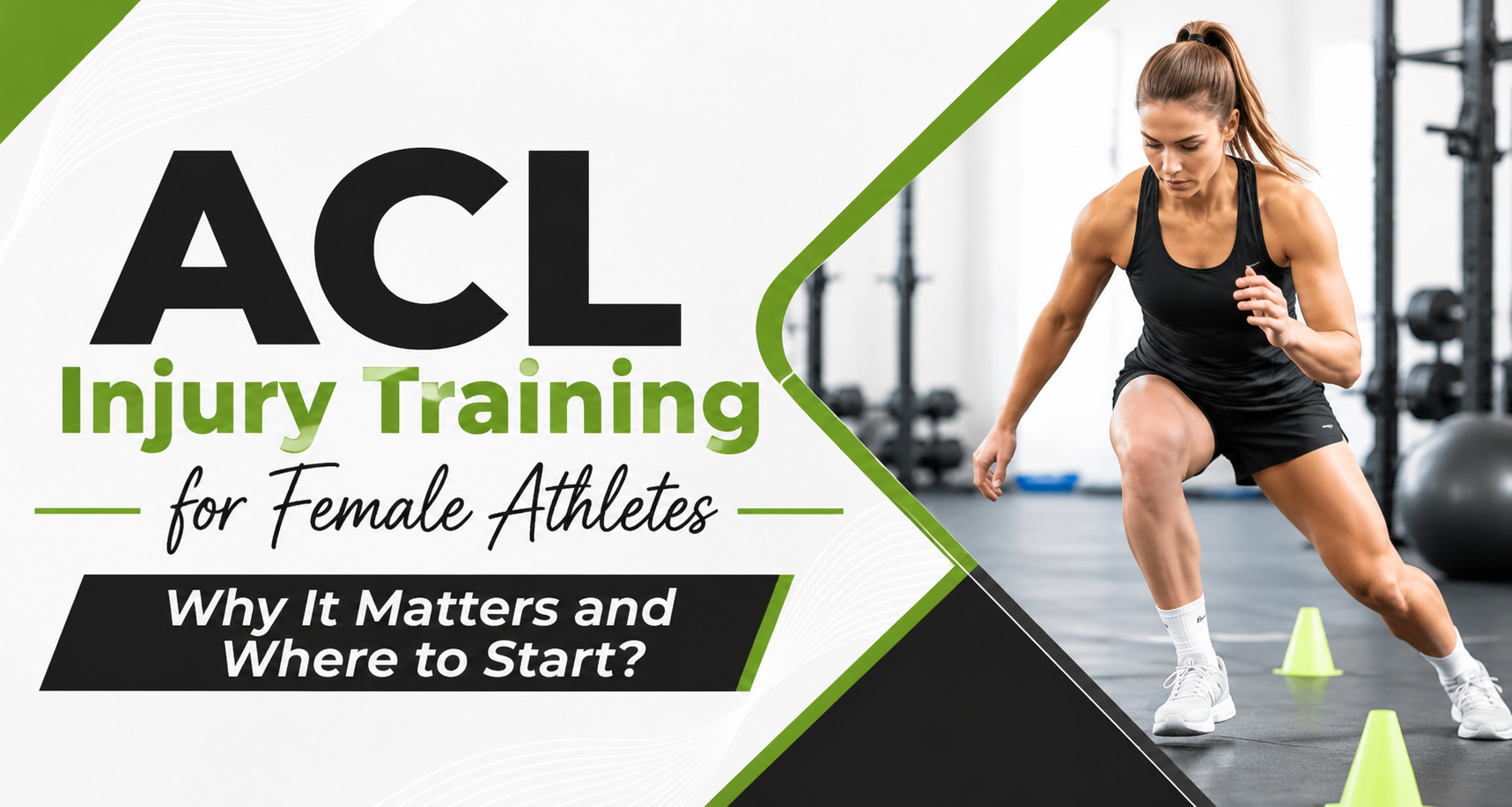
Objective: To explain why female athletes face a higher ACL risk and to give you practical, first-hand guidance on how to begin protecting your knees.
Key Takeaways:
- Female athletes have a higher ACL risk, but it is not inevitable.
- Strength, landing technique, balance and agility all matter.
- Training two to three times a week, with good coaching, gives the best protection.
- An early assessment helps us spot weaknesses before they become injuries.
Why Are Female Athletes at Higher Risk of ACL Injury?
Several factors combine to raise the risk, and none of them mean an injury is unavoidable.
Anatomy and Hormones
Women tend to have a wider pelvis, which can increase the angle at the knee. Hormonal changes may also affect ligament stiffness at certain points in the month. We cannot change these factors, but we can train around them.
Movement Patterns
The bigger issue is how athletes move. In our clinic, we often see:
- Knees collapsing inwards on landing
- Stiff, straight-legged landings
- Hamstrings that are weaker than the quadriceps
- Poor trunk and hip control on one leg
The good news is that every one of these patterns can be coached and corrected.
What Does ACL Injury Training Involve?
A good programme rests on four pillars. We build each one gradually and tailor it to your sport and ability.
Pillar 1: Strength
ACL muscle strengthening focuses on the hamstrings, glutes, quadriceps and calves, because strong muscles share the load that would otherwise stress the ligament. Well-planned strength training to prevent ACL injuries starts with simple movements such as squats, hip bridges and Romanian deadlifts. We then add load and single-leg work as your control improves.
Pillar 2: Landing and Deceleration
Most non-contact tears happen when an athlete slows down, lands or changes direction. Practising these skills in a controlled way teaches your body to absorb force safely.
Landing Cues to Practise
- Land softly, with hips back and knees bent
- Keep your knees tracking over your toes
- Stay tall through your chest
Quick Tip
Film yourself from the front. Inward-drifting knees are easy to spot on video.
Pillar 3: Balance and Control
Single-leg balance drills, such as step-downs and slow reaches, improve how your brain and muscles talk to each other. This makes your knee more stable when you are tired and under pressure.
Pillar 4: Agility and Power
Once your strength and landing are sound, we introduce hopping, bounding and cutting drills. These prepare you for the speed and unpredictability of real matches.
How Can You Start Training Safely?
You can get going with very little kit, often just a mat and a resistance band. This is the order we normally take people through:
- Book an assessment first: We watch you squat, hop and balance on one leg, which shows us where you are strong and where you are not.
- Warm up before every session: Ten to fifteen minutes of skipping, lunges and leg swings is enough to get your knees ready.
- Get the basics right before adding weight: A slow, controlled squat beats a heavy, wobbly one every time.
- Bring in landing and balance work: Two or three times a week is plenty, and you can tag it onto the end of your usual training.
- Add agility work last: Sprints, jumps and quick changes of direction only come in once the earlier steps feel easy.
If you would like a plan built around your sport, you can book an appointment with our team and we will guide you from the first session.
When Should You See a Sports Therapist?
Prevention work is useful for any active woman, but certain signs mean you should speak to us sooner:
- Your knee feels unstable or “gives way”
- You have had a previous knee injury or surgery
- You feel pain or swelling after training
- You are returning to sport after a long break
We treat a wide range of problems, and you can find out more on our knee injuries page. We also offer sessions at our Canary Wharf and Surrey Quays clinics, so support is never far away.
Frequently Asked Questions
1. Why are female athletes more prone to ACL tears?
A mix of anatomy, hormones and movement habits plays a part. Of these, movement and strength are the factors we can change most effectively.
2. How often should I do ACL prevention exercises?
Two or three times a week works well for most people, and each session only needs 20 to 30 minutes. A short session done regularly does far more for your knees than one long session squeezed in when you remember.
3. Can I start if I have never hurt my knee?
Yes, and that is the ideal time to begin. Building strength and good landing habits before an injury is far easier than rebuilding afterwards.
4. Is this only for elite athletes?
No. Weekend footballers, gym-goers, dancers and runners all benefit from stronger, better-controlled knees.
5. Where can I get a personalised plan in London?
We offer one-to-one assessments and programmes at our Canary Wharf and Surrey Quays clinics. We will design a plan around your sport, schedule and goals.
Start ACL Injury Training with Fisio Sports Therapy
Protecting your knees is one of the smartest things you can do for your sporting future. With the right strength work, landing technique and expert coaching, you can play with far more confidence. At Fisio Sports Therapy, we are ready to assess you, build your programme and support you at every step.