Recovering from an ACL injury involves more than managing pain. As rehabilitation progresses, muscle discomfort or tension can sometimes make movement and exercise more difficult. In these situations, sports acupuncture and dry needling therapy may provide supportive pain relief and help make movement more comfortable. They do not repair a torn ACL or replace rehabilitation and strength training, which remain important for rebuilding strength, mobility, stability, and control before returning to activity or sport.
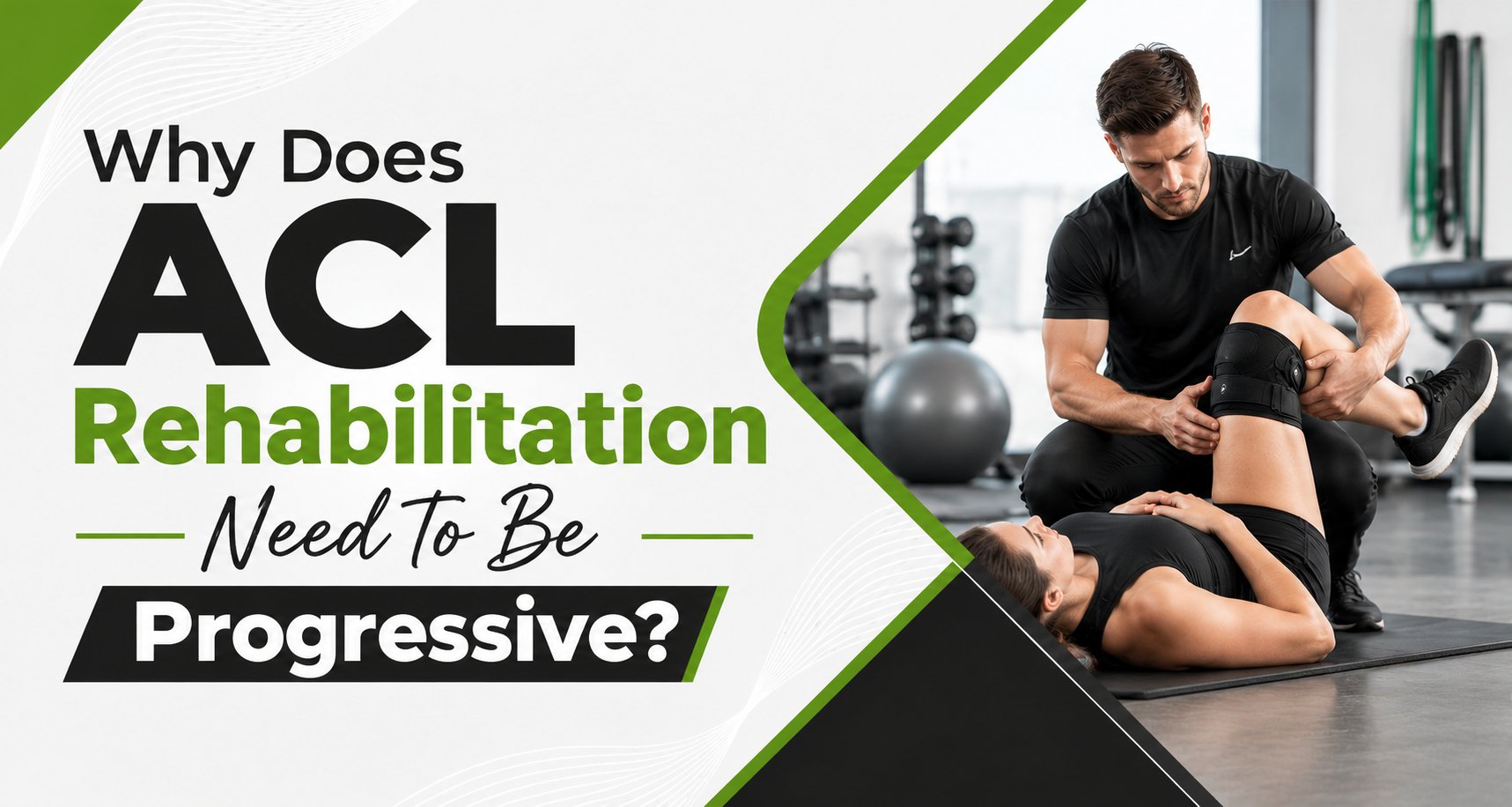
Why Does ACL Rehabilitation Need to Be Progressive?
The muscles around the knee can lose strength when activity is reduced following an ACL injury. A person may also change the way they walk or move because the knee feels uncomfortable or unstable. Over time, these changes can affect how the lower limb works as a whole.
This is why ACL injury training is not usually the same from one stage to the next.
Early rehabilitation may involve restoring movement and rebuilding basic strength. As the knee becomes more capable, exercises can place greater demands on the muscles and movement patterns. Someone preparing to return to sport will eventually need to deal with activities such as running, jumping, landing and changing direction.
Fisio Sports Therapy’s ACL rehabilitation approach combines rehabilitation with strength and conditioning. Its program focuses on improving areas such as strength and mobility while adapting rehabilitation to the individual’s needs and progress.
What Role Can Sports Acupuncture and Dry Needling Play?
Fisio Sports Therapy offers sports acupuncture and dry needling as part of its treatment services for pain relief and recovery support. These techniques can be used to target particular muscle groups when appropriate.
Dry needling involves the use of fine needles in specific areas of muscle. When used during ACL rehabilitation, the intention is not to treat the injured ligament directly. Instead, it may be considered where muscular discomfort or tension is affecting movement.
Sports acupuncture can also be used within a sports therapy setting as part of an individual’s treatment. The distinction between treatment and rehabilitation is important. Needling may help with a symptom, but it does not rebuild the strength required to run, jump, or change direction. That work still comes from a properly progressed rehabilitation program.
How Might Dry Needling Help During ACL Training?
Recovery does not always feel the same throughout the rehabilitation process. As activity changes, different muscles may become sore, tight or uncomfortable. Sometimes this can make an otherwise appropriate exercise difficult to perform.
A therapist may consider dry needling when a particular muscular problem is interfering with movement or training. If the area responds well to treatment, the person may find certain movements easier to perform.
That can be useful, but it is only one part of the process.
The important question is what the person can do after the symptom has been managed. They still need to work on strength, movement, and control. Feeling less discomfort does not mean that the ACL is ready to handle a higher level of activity.
Research has looked at dry needling after ACL reconstruction, including its possible effect on pain and knee function. However, the evidence is still limited. It is therefore more accurate to describe dry needling as a complementary technique rather than a treatment that heals the ACL.
Why Is Strength Training Important After an ACL Injury?
Strength is one of the main things that needs to be rebuilt during ACL rehabilitation. When the affected leg has become weaker, simply returning to normal activity may not provide enough stimulus to restore the strength needed for sport.
The training needs to develop with the individual. Resistance, repetitions, exercise selection, and movement demands can all be adjusted as the person’s capacity improves.
A rehabilitation program may gradually work on:
- Strength in the muscles around the knee and lower limb
- Stability and control during movement
- Tolerance to increasing training loads
- Functional movements that relate to daily life and sport
For an athlete, this progression is particularly important. Walking comfortably does not place the same demands on the knee as sprinting or changing direction.
This is why strength and conditioning form an important part of the ACL rehabilitation approach at Fisio Sports Therapy. The goal is to help the individual build the physical capacity required for the next stage of activity.
Preparing for a Return to Sport
Returning to sport should be approached gradually. The knee needs to cope with the movements and loads that the person’s sport involves, and these can be considerably greater than those required for everyday activities.
A football player, for example, may need to accelerate, stop suddenly, turn and land from a jump. Another athlete may face a completely different set of demands.
Rehabilitation should take these differences into account.
These therapies may be useful if muscle discomfort becomes a barrier to training, but they do not decide when an athlete is ready to return. Strength, mobility, stability, movement control and the ability to tolerate increasing physical demands all have a role in that decision.
Can Strength Training Help Prevent ACL Injuries?
Strength training to prevent ACL injuries can be part of an athlete’s wider preparation. Developing lower-limb strength and movement control can help the body cope with the physical demands placed on it during sport.
It is worth keeping the claim realistic. Strength training cannot guarantee that an ACL injury will not happen. Injury risk is influenced by more than one factor.
For athletes who have already completed rehabilitation, maintaining strength and conditioning can also help preserve the physical improvements made during recovery.
Training may focus on:
- Maintaining lower-limb strength
- Improving movement control
- Progressively increasing physical demands
- Preparing for movements specific to the sport
Fisio Sports Therapy includes strength and conditioning within its ACL rehabilitation and injury prevention approach.
When Could Dry Needling Be Considered?
There is no standard point in ACL recovery when everyone needs dry needling. Its use depends on the person’s symptoms, recovery stage, and rehabilitation needs.
Someone who has recently had surgery will have different considerations from an athlete who is already performing more advanced exercises. Treatment therefore needs to be appropriate to the individual rather than applied simply because an ACL injury is present.
If muscular discomfort is making a particular movement difficult, targeted treatment may be considered as part of the wider plan. The aim is to support rehabilitation, not to make needling the centre of it.
Conclusion: Keeping ACL Recovery on Track
ACL recovery is a gradual process. The aim is not simply to reduce pain but to restore the strength, mobility, stability and movement control needed for everyday life and sport.
Sports acupuncture and dry needling therapy may help manage certain areas of muscular discomfort or tension along the way. They have a supporting role and should not replace progressive rehabilitation or strength training.
The same principle applies to training to prevent ACL injuries. Building and maintaining strength can help prepare the lower limb for sporting demands, including after a person has completed their initial rehabilitation.
A considered rehabilitation program gives each stage of recovery a purpose. Movement can be restored first, strength can be rebuilt progressively, and greater physical demands can then be introduced as the individual becomes ready for them.
Frequently Asked Questions
1. Can dry needling heal an ACL tear?
No. Dry needling does not repair a torn ACL. It is directed towards specific areas of muscle and may be used to help with muscular discomfort or tension. The ACL itself still requires appropriate medical and rehabilitation management.
2. Can sports acupuncture be used during ACL rehabilitation?
It may be appropriate for some people as part of their wider treatment plan. Fisio Sports Therapy provides sports acupuncture and dry needling for pain relief and recovery support. The decision to use either technique should take the person’s symptoms, injury, and stage of recovery into account.
3. Why does strength decrease after an ACL injury?
Reduced activity following an ACL injury or surgery can affect muscle strength. Changes in normal movement can also alter how the affected leg is used. Progressive strengthening helps rebuild the ability of the muscles to produce and control force as rehabilitation moves forward.
4. Is strength training enough to prevent an ACL injury?
No single type of training can guarantee that an ACL injury will be prevented. Strength training can, however, contribute to physical preparation by developing lower-limb strength and movement control. It is one part of a broader approach to injury prevention.
5. Does feeling pain-free mean I can return to sport?
Not necessarily. Everyday activities may place much less demand on the knee than sport. Before returning to higher-level activity, rehabilitation needs to consider strength, mobility, stability, movement control and the individual’s ability to tolerate the demands of their sport.