Most ACL tears happen during sudden stops, quick turns, or bad landings. To lower your risk, strengthen your hamstrings, glutes, and hips, learn to land softly with bent knees, and practice balance and safe cutting moves. Train 15–20 minutes, two to three times a week.
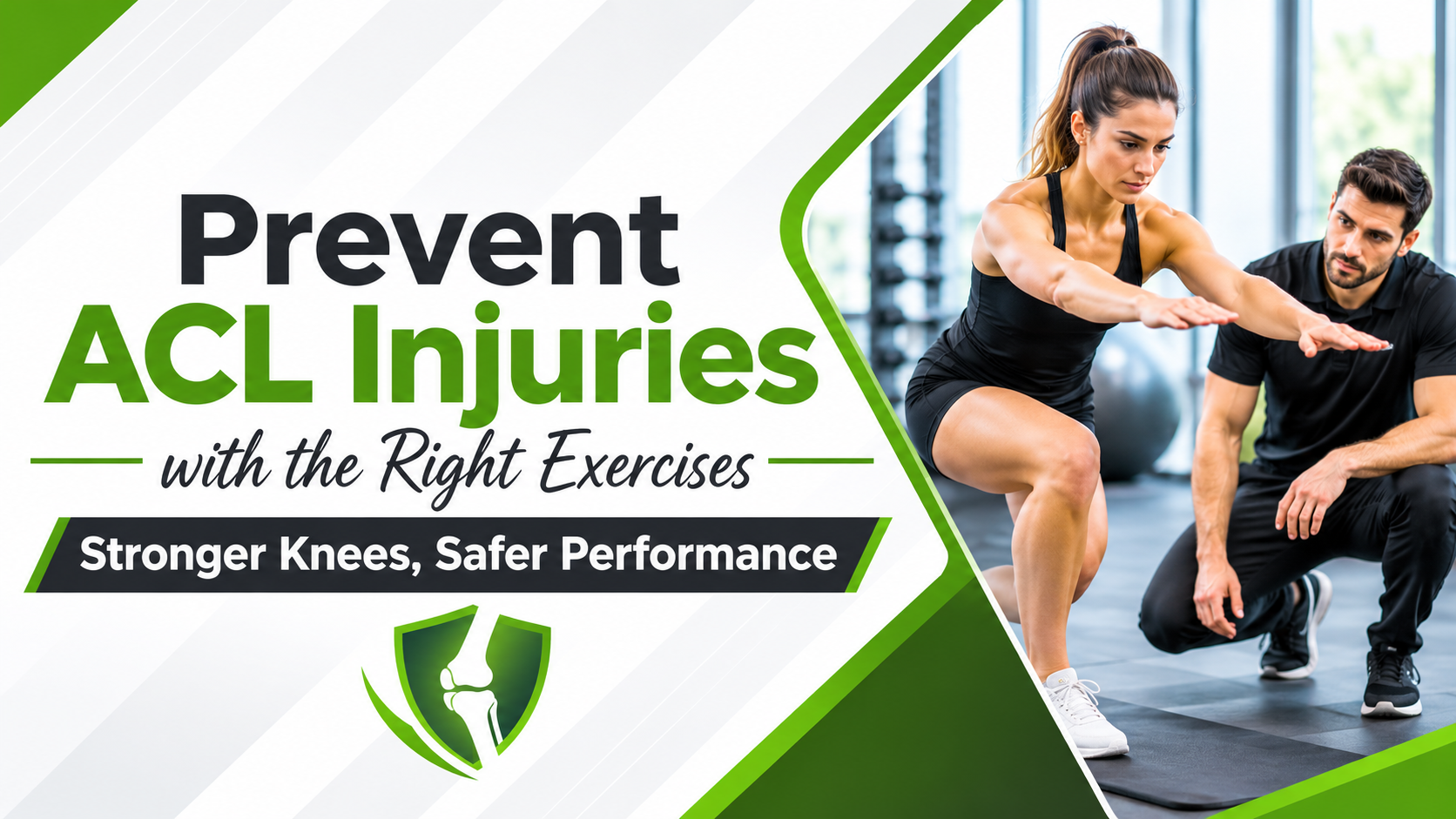
If most tears come down to how your body moves, the right training can change the outcome. Studies show that consistent exercises for ACL injury prevention can lower non-contact tear risk by about half, particularly in cutting and jumping sports like soccer, basketball, netball, and tennis. A program grounded in ACL and strength & conditioning principles teaches your knees to handle the forces your sport demands.
Want to protect your knees before an injury happens? At Fisio Sports Therapy, our sports physiotherapists create personalized ACL prevention programs for your sport and fitness level. Book your assessment today and stay strong, confident, and in the game.
Why ACL Tears Happen
The anterior cruciate ligament (ACL) runs through the middle of the knee. It keeps the shin bone from sliding forward and rotating too far beneath the thigh bone. Most tears happen without contact from another player. Typical moments include cutting sharply, pivoting on a planted foot, stopping suddenly, and landing awkwardly from a jump. Soccer, basketball, football, skiing, and netball all demand those movements.
Several factors raise the odds. Female athletes tear the ACL more often than male athletes in the same sports. Weak hamstrings and glutes leave the quadriceps doing most of the work, and a strong quad pulls the shin forward. Knees that cave inward on landing, stiff straight-legged landings, poor balance, and fatigue late in a match all add load. A previous ACL injury raises the risk for both knees. Strength, control, and technique can all be trained, so you have real influence over most of this.
Exercises for ACL Injury Prevention You Can Start This Week
Programs such as FIFA 11+ and PEP combine strength, balance, and landing work. Studies of them show fewer knee injuries when teams follow them consistently. You can borrow the same building blocks.
Hamstring and glute strength
Nordic hamstring curls: kneel with your ankles anchored, then lower your torso toward the floor as slowly as you can and catch yourself with your hands.
Romanian deadlifts: hinge at the hips with soft knees and a flat back until you feel the hamstrings stretch.
Glute bridges and hip thrusts: drive through your heels and squeeze at the top.
Lateral band walks: keep tension on the band and stop your knees from drifting inward.
Single-leg control
Split squats and step-downs: lower slowly and keep your knee tracking over your second toe.
Single-leg balance: hold for 30 seconds, then close your eyes or stand on a cushion.
Landing and jumping
Squat jumps with soft landings: land quietly, hips back, knees bent, and hold the position for two seconds.
Skater hops: bound side to side and stick each landing.
Once those feel easy, add controlled agility work like shuffles and cutting drills. Start at half speed and build up.
Strength Training to Prevent ACL Injuries
Bodyweight moves get you started, but strength training to prevent ACL injuries works best when the load climbs over time. Stronger muscles absorb force that would otherwise travel straight through the ligament. Your hamstrings matter most here because they resist the forward pull on the shin. Your quads, glutes, calves, and core all share the work too, so train them as a set instead of favoring the mirror muscles.
Use dumbbells, a barbell, or resistance bands. Add weight once your current reps feel easy and your form stays clean. Core strength helps as well, since a steady trunk limits the twisting forces that reach your knee. Aim for two sessions a week. Stopping in the off-season undoes much of the progress.
A Simple Weekly Plan
Start every practice or workout with a 10-minute warm-up: light jogging, dynamic stretches, and a few easy hops. Then fit your week around two strength days and two short sessions of landing and agility drills. Do the jump work early in a session while you are fresh, because tired legs land badly. About 15 to 20 minutes of these exercises for ACL prevention, two or three times a week, is a realistic target for most athletes.
Habits That Support ACL Injury Prevention
Training is only part of it. Sleep and rest days let your muscles recover, and fatigued muscles protect the knee poorly. Wear shoes that suit the surface you play on. If you notice your form falling apart late in a session, stop the drill and don’t push through it. Pay attention to a knee that feels unstable or gives way, even once. That is a reason to get it checked before the next game.
Start Your ACL Injury Prevention Plan with Fisio Sports Therapy
Preventing ACL injuries comes down to preparation, and regular exercises for ACL injury prevention are the most reliable way to get there. Strong hips and hamstrings, controlled landings, sharp balance, and practiced cutting mechanics give your knees the support they need when the game speeds up. A few focused sessions each week is a small investment compared with a year of rehab.
Want a program built around your sport, body, and injury history? The team at Fisio Sports Therapy offers movement screening and tailored ACL strength and conditioning at our Canary Wharf and Surrey Quays clinics. Book your appointment today and train with confidence.
Frequently Asked Questions
Can exercise really prevent ACL tears?
It lowers the odds without removing them. Collisions and bad luck still happen. Athletes who train strength, balance, and landing technique tend to get hurt less often than those who don’t.
How often should I do these exercises?
Two to three times a week works for most people, and it helps to keep going during the season as well.
What is the single best exercise?
No one move does it all. If you only pick two, choose Nordic hamstring curls and soft-landing jumps, since they cover hamstring strength and landing mechanics.
Are women at higher risk?
Yes, female athletes tear the ACL more often in the same sports. That makes a regular prevention routine especially worthwhile, though it benefits everyone.
When should I see a professional?
See one if you heard a pop during an injury, or if your knee swells, gives way, or hurts when you pivot.